

Laser Hair Removal in Bahrain
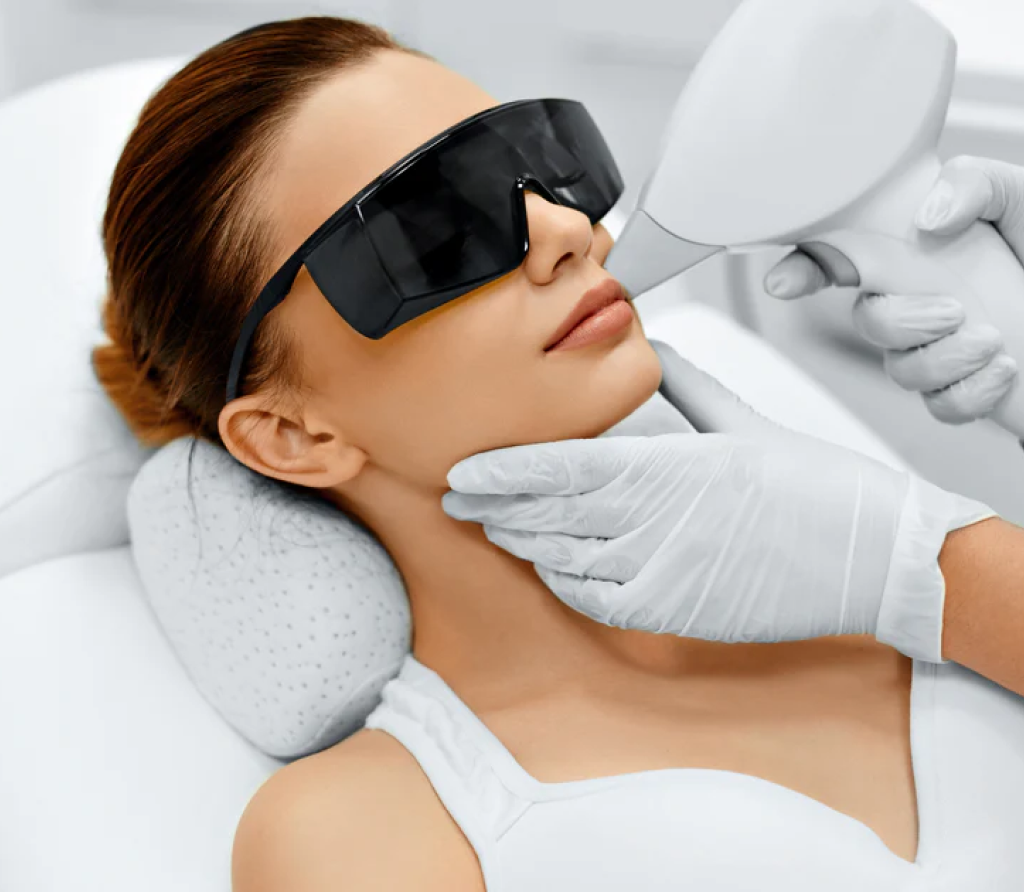
Long-term hair reduction with laser treatment
Provided by our dermatology team: Dr. Amal Fakhry, Dr. Samar Fakhry and Dr. Noha Elsayed, Dermatology Specialists. Last updated October 2026.
Laser hair removal is a medical treatment that reduces unwanted hair on the face and body. Instead of removing hair at the surface, as shaving or waxing does, the laser targets the hair follicle so that fewer hairs grow back, and those that do are usually finer and lighter.
It is a course of treatment rather than a single visit, and the aim is long-term hair reduction, not complete removal of every hair. At Stanford Clinics in Bahrain, your treatment starts with an assessment by our dermatology team, who check your skin type, hair colour and medical history before recommending a plan.
What is laser hair removal?
The laser sends pulses of light into the skin. The pigment (melanin) in the hair absorbs this light and turns it into heat, which damages the follicle and slows or stops future growth, while the surrounding skin is protected by cooling.
Laser works best on hairs that are in their active growth phase. Because only some hairs are in this phase at any one time, several sessions spaced a few weeks apart are needed to treat each follicle at the right moment.
Commonly treated areas include:
- Face: upper lip, chin, cheeks and sides of the face.
- Underarms.
- Arms and hands.
- Legs: lower legs, thighs or full legs.
- Bikini line.
- Back, chest and abdomen.
- Neck and beard line: for example to reduce ingrown hairs or shape the beard.
Laser hair removal is not suitable for every hair. It works best on dark hair, because the laser needs pigment to target. White, grey, very light blonde and red hair usually respond poorly. Your dermatologist will tell you honestly at your consultation whether laser is likely to help you or whether another approach would be better.
Who laser hair removal suits
- Women: often for the face, underarms, legs and bikini line.
- Men: often for the back, chest, shoulders and neck, or to reduce ingrown hairs in the beard area.
Laser hair removal can be used for both women and men, and for a wide range of skin tones. Darker skin needs particular care, because the skin itself contains more pigment. Your dermatologist chooses the laser settings, and where needed the wavelength, to suit your skin type, which lowers the risk of burns or pigment changes.
People with hormonal conditions such as polycystic ovary syndrome (PCOS) can also be treated, but they may need more sessions and occasional maintenance, as hormones can stimulate new hair growth.
Who should not have laser hair removal
Treatment may need to be postponed, adjusted or avoided if you:
- are pregnant or breastfeeding
- have a recent tan, sunburn or self-tan on the area
- have taken isotretinoin (Roaccutane) recently, or take medicines that make the skin sensitive to light
- have an active skin infection, cold sores, eczema flare or open wound in the area
- have a history of keloid scarring or light-triggered epilepsy
- have tattoos or moles in the area that have not been checked
Please tell your doctor about all medicines and supplements you take, including creams applied to the skin.
What happens during your treatment
Consultation and patch test
Every new patient has a consultation with our dermatology team before the first session. During this visit we:
- Review your medical history, medicines and any previous hair removal treatments.
- Assess your skin type and your hair colour and thickness.
- Look for signs of hormonal causes of excess hair that may need checking first.
- Check moles, tattoos or skin conditions in the area to be treated.
- Agree the areas, the likely number of sessions and the interval between them.
A small test patch is usually carried out so we can see how your skin responds before treating a larger area. This is also your chance to ask questions about the number of sessions, what to expect and any concerns you have.
Before your session
Good preparation makes treatment safer and more effective. Before each session:
- Avoid the sun: no tanning, sunbeds or self-tan for at least two weeks.
- Shave, don't pluck: shave the area 24 hours before. Avoid waxing, threading or plucking for about four weeks.
- Clean skin: come without make-up, deodorant, lotions or perfume on the area.
- Medicines: tell us about any new medicines, especially antibiotics or acne treatments.
During the session
A session can take from a few minutes for the upper lip to around an hour for large areas such as the full legs or back. A typical session involves:
- Eye protection: you and the practitioner wear protective glasses.
- Preparation: the area is cleaned and any remaining hair is trimmed.
- Settings: the laser is set for your skin type and hair.
- Treatment: short pulses of light are applied across the area, with cooling to protect the skin.
- Soothing: a calming gel or cold compress may be applied afterwards.
- Next steps: you receive aftercare advice and the date for your next session.
Aftercare
Mild redness and small bumps around the hair follicles are common and usually settle within a few hours to a couple of days. To look after your skin:
- Avoid sun exposure and use a broad-spectrum sunscreen (SPF 30 or higher) on exposed areas.
- Avoid hot baths, saunas, steam rooms and strenuous exercise for 24 to 48 hours.
- Skip scrubs, perfumed products and active skincare such as retinoids for a few days.
- Do not pick at the skin. Shave if needed, but do not wax or pluck between sessions.
- Contact the clinic if you notice blistering, crusting or pain that does not settle.
Results, side effects and cost
Treated hairs usually shed over 1 to 3 weeks after each session, which can look like regrowth at first. Most people need around 6 to 8 sessions, spaced roughly 4 to 8 weeks apart depending on the area, and some need more. Many people see a clear, long-lasting reduction in hair, but some hairs may return over time, so occasional maintenance sessions are common. Results vary between people and depend on hair colour, skin type, the area treated and hormones.
Side effects and risks
Common, short-lived effects include redness, swelling around the follicles, a warm or stinging feeling and mild itching. Less commonly, the skin can blister, crust or develop temporary darker or lighter patches, especially after sun exposure or on darker skin. Rarely, burns, lasting pigment changes, scarring or increased hair growth near the treated area (paradoxical hypertrichosis) can occur. Protective eyewear is worn throughout treatment because lasers can harm the eyes.
Cost of laser hair removal in Bahrain
The cost depends on the areas treated, their size and the number of sessions you need, so we confirm a price after your consultation rather than quoting a fixed figure. Your dermatologist will explain the plan and the cost before treatment begins.
Frequently asked questions
Is laser hair removal permanent?
It gives long-term hair reduction rather than guaranteed permanent removal. Most people have much less hair after a full course, but some regrowth over the years is normal and may need a top-up session.
Does it hurt?
Most people describe a quick snap or warm prick with each pulse. Cooling is used during treatment, and sensitive areas can feel more uncomfortable than others.
How many sessions will I need?
Usually around 6 to 8, but this varies with the area, your hair and skin type, and hormonal factors. Your dermatologist will give you an estimate at your consultation.
Can I shave between sessions?
Yes. Shaving is fine, but avoid waxing, threading, plucking and epilating, because these remove the hair root the laser needs to target.
Is it safe for darker skin?
It can be, with the right laser settings and an experienced team. Darker skin carries a higher risk of pigment changes, so a patch test and careful settings are especially important.
Can I go in the sun after treatment?
Avoid direct sun and tanning for at least two weeks before and after each session, and use a broad-spectrum sunscreen (SPF 30 or higher) on treated areas that are exposed.

Book a laser hair removal consultation at Stanford Clinics
If you are tired of shaving, waxing or threading, the first step is a consultation with our dermatology team. We will assess your skin and hair, explain whether laser is suitable for you, and recommend a treatment plan with a realistic number of sessions.
Book your appointment online, call us or message us on WhatsApp. You can also find our contact details here.