

Body Lift in Bahrain
Overview
Provided by our consultant plastic surgeons at Stanford Clinics. Last updated October 2026.
After major weight loss, pregnancy or with ageing, the skin may not shrink back. Loose, overhanging skin on the tummy, arms, thighs or buttocks can be uncomfortable, cause rubbing and skin irritation, and make clothes harder to fit, even when you have worked hard to reach a healthy weight.
Body lift and body contouring surgery removes this excess skin and some underlying fat, and tightens the remaining tissues. At Stanford Clinics in Bahrain, every patient starts with a consultation with one of our consultant plastic surgeons, who will examine the areas that concern you and explain honestly what surgery can achieve, the scars it leaves and what recovery involves.
What is a body lift?
“Body lift” is a general term for operations that remove excess skin and fat and lift the remaining tissues to improve the contour of the body. It can treat a single area, such as the tummy or upper arms, or several areas, either in one operation or in stages.
It is important to know that body contouring is not a weight-loss operation. It works best once your weight has been stable for some time. It also involves a trade-off: in exchange for a firmer, smoother shape, you will have long scars, which your surgeon will plan to sit where clothing can usually cover them.
Who body contouring surgery suits
Body contouring may suit men and women who are in good general health and who have:
- Loose skin: overhanging skin after major weight loss, pregnancy or ageing.
- Stable weight: a weight that has been steady for several months, close to your goal.
- Good health: no medical conditions that would make surgery or healing unsafe.
- Non-smoker: or willing to stop well before and after surgery.
- Realistic expectations: understanding that scars are long and permanent and results vary.
Types of body lift and body contouring surgery
Your surgeon will recommend a plan based on where the loose skin is and how much there is. Common procedures include:
Arm lift (brachioplasty)
An arm lift removes loose skin and fat from the underside of the upper arm. The incision usually runs along the inner arm from the armpit towards the elbow, so the scar faces the body when the arms are down, although it can be visible when the arms are raised.
Liposuction may be used alongside it to refine the shape. If there is mainly excess fat with good skin tone, liposuction alone may be considered instead. Arm lift surgery is usually performed under general anaesthesia and commonly takes around 2 to 3 hours.
Thigh lift (thighplasty)
A thigh lift removes excess skin and fat from the inner thighs, and sometimes the outer thighs. The incision is placed in the groin crease and, when there is a lot of loose skin, may extend down the inner thigh towards the knee.
It is usually performed under general anaesthesia. Swelling in the legs can take several months to settle, and scars in the groin area need careful care while healing.
Tummy tuck (abdominoplasty)
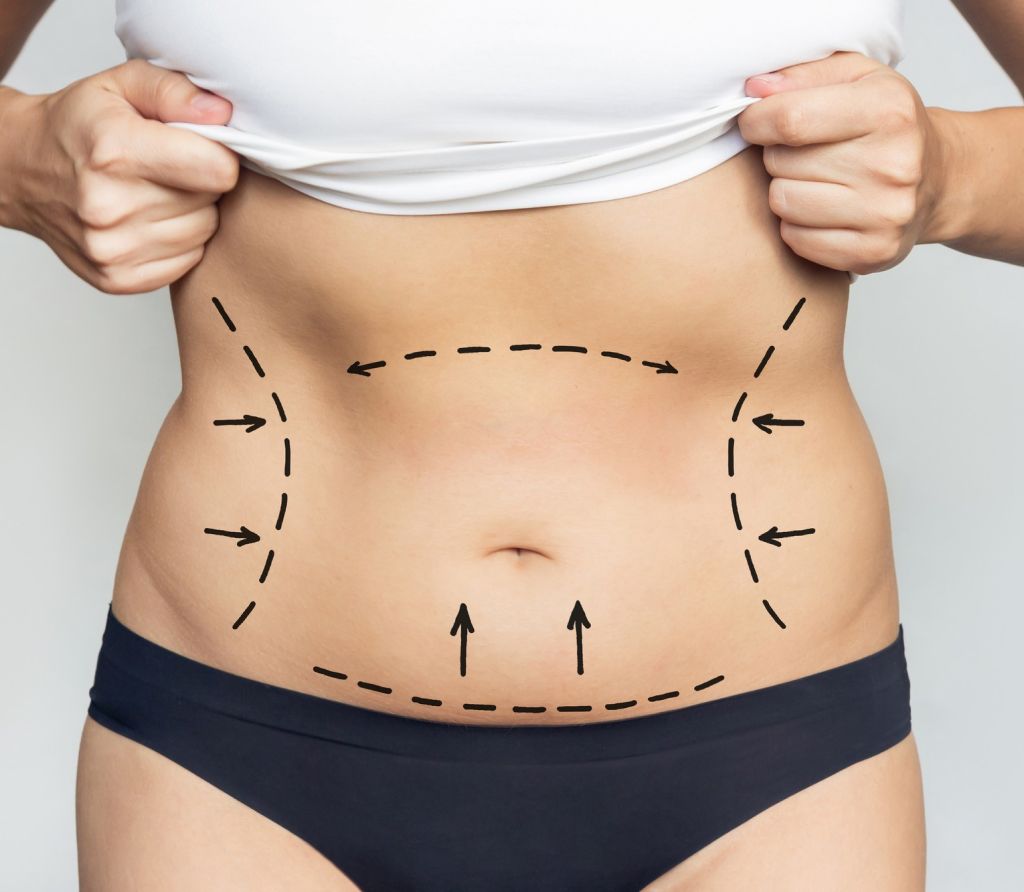
A tummy tuck removes loose skin and fat from the lower abdomen and, where needed, repairs separated abdominal muscles (often stretched by pregnancy). The navel is repositioned so that it sits naturally in the tightened skin.
The main scar runs low across the abdomen from hip to hip, usually below the underwear or swimwear line, with a further scar around the navel. A mini tummy tuck, with a shorter scar, may suit people with a small amount of loose skin below the navel only.
A tummy tuck is performed under general anaesthesia and usually takes around 2 to 4 hours, often with an overnight stay. It is generally best to wait until you have finished having children, as a future pregnancy can stretch the muscles and skin again.
Buttock lift
A buttock lift removes loose skin and fat above the buttocks to lift and tighten the area. The scar sits across the lower back, near the top of the buttocks, where it can usually be hidden by underwear. It is often performed as part of a lower body lift. Your surgeon will explain whether it suits you and how it differs from other buttock procedures.
Lower body lift (circumferential body lift)
A lower body lift treats the tummy, hips, outer thighs and buttocks in one operation, using an incision that runs right around the waist. It is mainly used after major weight loss, when loose skin hangs around the whole lower body.
It is a major operation, performed under general anaesthesia and often taking several hours. A hospital stay of one or more nights is usual, and recovery takes longer than for single-area procedures. Some patients have their body contouring in stages to reduce the time under anaesthesia.
Surgery, recovery and aftercare
Before surgery: you will have a health check and blood tests, and receive instructions on fasting, medicines to pause, and stopping smoking. Measures to reduce the risk of blood clots will be explained.
On the day: the surgeon marks the planned incisions with you standing. The operation is performed under general anaesthesia. Drains are often placed to remove fluid, and you wear a compression garment afterwards.
Recovery: expect swelling, bruising, tightness and discomfort, controlled with prescribed medicines. Many people return to desk-based work after about 2 to 4 weeks, longer after a lower body lift or for physical jobs. Strenuous exercise is usually avoided for at least 6 weeks. Swelling settles over several months.
Aftercare:
- Walk early: short, gentle walks from the first day help prevent blood clots.
- Wear your garment: keep the compression garment on as instructed, usually for around 6 weeks.
- Avoid strain: no heavy lifting or strenuous exercise for at least 6 weeks.
- Care for wounds and drains: follow the instructions given and attend all follow-up visits.
- Report warning signs: contact us promptly about fever, increasing pain, redness, leg swelling or shortness of breath.
Scarring: body contouring scars are long and permanent. They are usually red or raised at first and gradually flatten and fade over 12 to 18 months. How scars heal varies between people and skin types.
Risks: common issues include fluid collecting under the skin (seroma), slow healing or small areas of wound breakdown, and numbness near the scars. Other risks include bleeding, infection, blood clots in the legs or lungs, asymmetry, contour irregularities or small folds at the end of the scars, widened or thick scars, prolonged swelling in the arms or legs, anaesthetic risks, and the need for further surgery. Risks are higher in people who smoke, have diabetes or a high BMI.
Who should wait: people who are still losing weight, plan a pregnancy soon, smoke, or have medical conditions that are not well controlled. After weight-loss surgery, surgeons usually prefer your weight to have been stable for several months first.
Results: the removal of excess skin is long-lasting, but the body continues to age, and weight gain or pregnancy can change the result. Results vary between people.
Cost: the cost depends on which areas are treated, whether procedures are combined or staged, anaesthesia and hospital stay. We confirm a price after your consultation rather than quoting a fixed figure.
Frequently asked questions
How long should I wait after weight loss?
Ideally until your weight has been stable for several months, often 6 to 12 months or more after weight-loss surgery. Your surgeon will advise based on your history.
Will I lose weight with a body lift?
The scale may change a little because skin and fat are removed, but body contouring is not a weight-loss treatment. Its aim is a better shape and comfort.
Can several areas be done at once?
Sometimes. Combining procedures can mean one recovery, but longer surgery carries more risk. Your surgeon may recommend staging operations for safety.
How visible will the scars be?
Scars are long, but they are placed where clothing or swimwear usually covers them. They fade over time but will not disappear completely.
How long do I wear a compression garment?
Usually for around 6 weeks, although this varies by procedure and surgeon advice.
Can I have children after a tummy tuck?
Yes, but pregnancy can stretch the muscles and skin again, so many people prefer to wait until they have finished their family.
Book a body lift consultation at Stanford Clinics
If loose skin after weight loss, pregnancy or ageing is affecting your comfort or confidence, the first step is a consultation with one of our consultant plastic surgeons. We will listen to your goals, examine the areas that concern you, and explain the options, scars, recovery and risks clearly, so you can decide in your own time.
Book your appointment online, call us or message us on WhatsApp. You can also find our contact details here.