

Skin Whitening Treatment in Bahrain
Provided by our dermatology team: Dr. Amal Fakhry, Dr. Samar Fakhry and Dr. Noha Elsayed, Dermatology Specialists. Last updated October 2026.
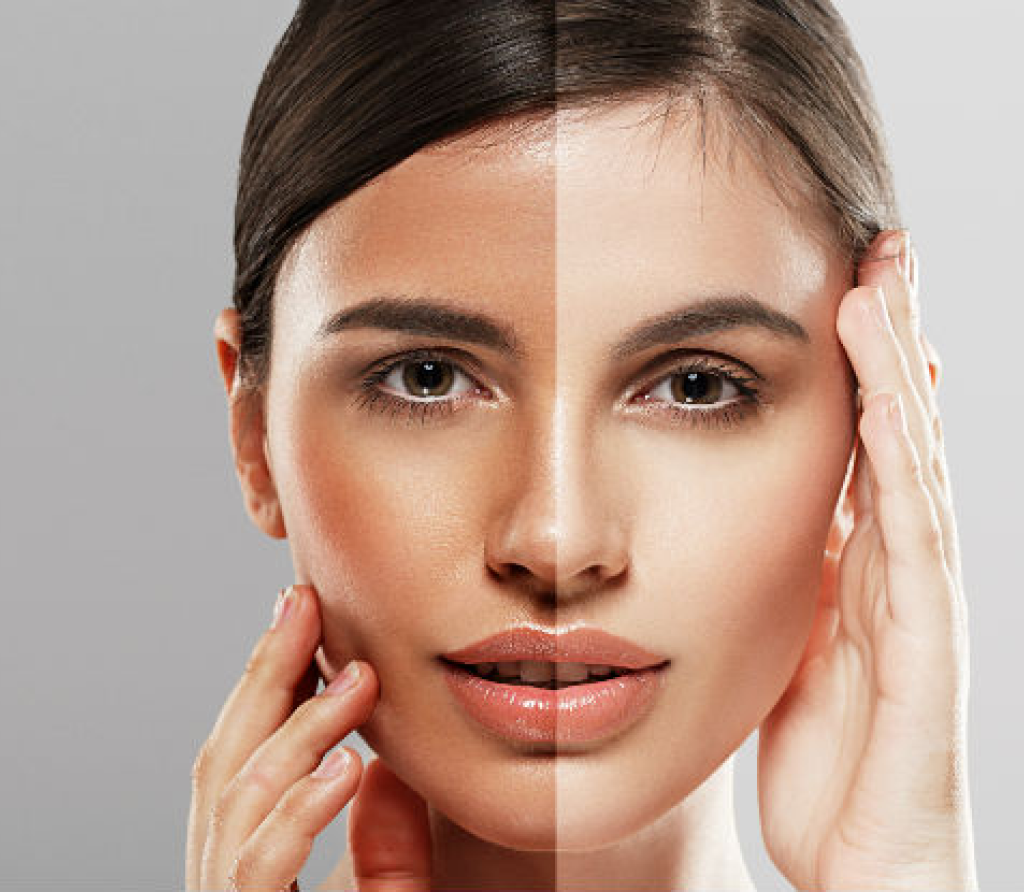
Many people want a more even, brighter-looking complexion because of dark spots, patches or marks on their skin. These are usually caused by hyperpigmentation, where some areas of skin make more pigment than others.
At Stanford Clinics in Bahrain, our dermatology team treats hyperpigmentation to even out skin tone. The aim is to fade areas that have become darker, not to change your natural skin colour. Every plan starts with a consultation to find the cause of the pigmentation, because this decides which treatment is likely to help.
What are skin brightening treatments?
Skin colour comes from melanin, a pigment made by cells in the skin. Sun exposure, hormones, inflammation such as acne, and some medicines can cause these cells to make extra melanin in certain areas, leaving darker patches.
Skin brightening treatments work in different ways: some slow down melanin production, some help the skin shed pigmented cells faster, and some break up pigment so the body can clear it. Daily sun protection is essential with all of them, because sunlight is the main reason pigmentation returns.
What these treatments can help with
Your dermatologist will first confirm what is causing the uneven tone. Treatments can help with:
Sun spots and sun damage
Freckles and age spots
Uneven, dull skin tone
Treatment is most often used on the face, but darker areas on the neck, underarms, elbows, knees and hands can also be assessed. Some causes of darkening, such as hormonal or medical conditions or certain medicines, need to be checked and managed first.
What happens at your appointment
Your first visit is a consultation with our dermatology team. A typical treatment journey looks like this:
- Consultation: your dermatologist asks about your skin history, medicines, skincare and sun exposure.
- Skin examination: the pigmentation is examined, sometimes with a special light, to judge its cause and depth.
- Plan: you agree a plan, usually starting with sun protection and prescription skincare.
- In-clinic treatment: peels, laser or other treatments are added if suitable, usually as a course.
- Aftercare: you receive written instructions after each session.
- Review: regular follow-ups let us adjust the plan and plan maintenance.
Who should not have these treatments
Not every treatment is suitable for everyone. Some options may need to be postponed or avoided if you:
- Are pregnant or breastfeeding: many creams, peels and procedures are avoided during this time.
- Are under 18: treatment for younger patients is considered case by case.
- Have a recent tan or sunburn on the area to be treated.
- Have an active skin infection, cold sores or open wounds in the area.
- Have recently taken isotretinoin (Roaccutane) or medicines that make the skin sensitive to light.
- Have a history of keloid scars or poor wound healing.
Treatment options
There is no single treatment that suits every type of pigmentation. Most plans start with daily broad-spectrum sunscreen (SPF 30 or higher) and prescription skincare, and then add in-clinic treatments where they are likely to help. Your dermatologist will explain the options below and recommend a combination for you.
Glutathione injections and drips
Glutathione is an antioxidant made naturally by the body. Some people ask about glutathione injections or IV drips to brighten the skin. There is limited scientific evidence that they fade pigmentation, and no injectable product is approved specifically for skin lightening by major regulators such as the US FDA. It is not a first-line treatment for hyperpigmentation.
If you are interested, your doctor will discuss whether it is appropriate for you, what you can realistically expect, and the possible side effects, such as bruising at the injection site and, rarely, allergic reactions. It is not given during pregnancy or breastfeeding.
Laser treatment
Lasers and similar light-based devices deliver energy that is absorbed by pigment, breaking it into smaller particles that the body gradually clears. They can work well for sun spots and some freckles. For melasma and on darker skin, laser is used cautiously at gentle settings, because irritation can trigger more pigmentation. Several sessions are usually needed.
Chemical peels
Chemical peels use a carefully selected acid solution to remove the outer layers of skin, helping pigmented cells shed faster and leaving a smoother, more even surface. Gentle peels are usually given as a course a few weeks apart, with little downtime.
Prescription creams and skincare
Prescription creams are often the most important part of treating hyperpigmentation. Depending on your skin, your dermatologist may recommend ingredients such as hydroquinone, retinoids, azelaic acid, tranexamic acid, kojic acid or vitamin C. Some of these are used for limited periods under medical supervision. We advise against unregulated whitening creams, which can contain strong steroids or mercury that may damage the skin.
Microdermabrasion
Microdermabrasion gently exfoliates the outermost layer of skin with a fine abrasive tip. It can make the skin look smoother and brighter and may help very superficial pigmentation, but its effect on deeper pigment is limited. It is usually combined with other treatments.
Aftercare, recovery and results
After peels or laser you may have redness, mild swelling, flaking or temporary darkening of spots for a few days. To protect your results:
- Use a broad-spectrum sunscreen (SPF 30 or higher) every day and reapply it, and wear a hat in the sun.
- Use a gentle cleanser and moisturiser, and do not pick at flaking skin.
- Pause scrubs and strong active products until your doctor says you can restart.
- Avoid saunas, steam rooms and strenuous exercise for a day or two after in-clinic treatments.
Improvement is gradual, usually over 2 to 3 months or more. Some pigmentation, such as sun spots, may fade well, while melasma often returns and needs ongoing care. Results vary between people and depend on the cause, depth of pigment and how consistently sun protection is used.
Side effects, safety and cost
Skin brightening treatments are generally safe when chosen and supervised by a dermatologist, but they can have side effects. Creams can cause redness, dryness or irritation. Peels and lasers can cause temporary redness, swelling and peeling. Less commonly, the skin can become darker (post-inflammatory hyperpigmentation), or lighter patches can appear, especially in darker skin. Rarely, burns, infection or scarring can occur. Your dermatologist will explain the risks of your specific plan.
Cost of skin brightening treatment in Bahrain
The cost depends on the cause of your pigmentation, the treatments recommended and the number of sessions you need, so we confirm a price after your consultation rather than quoting a fixed figure.
Frequently asked questions
Will this change my natural skin colour?
No. Treatment aims to fade areas that have become darker and even out your tone. It does not change your natural skin colour.
How long until I see results?
Most people notice gradual improvement over 2 to 3 months. Deeper pigmentation can take longer.
Will the pigmentation come back?
It can, especially with sun exposure or hormonal changes. Daily sunscreen and maintenance treatment help keep results.
Is laser safe for darker skin?
It can be, with careful settings and experienced supervision, but darker skin has a higher risk of pigment changes. Your dermatologist may recommend creams or peels first.
Can I use whitening creams bought online?
We advise against it. Some unregulated products contain harmful ingredients such as strong steroids or mercury.
Do I need more than one session?
Usually yes. Peels and laser are given as a course, alongside daily skincare at home.
Book a skin brightening consultation at Stanford Clinics
If dark spots, patches or uneven skin tone are bothering you, the first step is a consultation with our dermatology team. We will find out what is causing the pigmentation and recommend a realistic plan that suits your skin.
Book your appointment online, call us or message us on WhatsApp. You can also find our contact details here.