

Laser Tattoo Removal in Bahrain
Provided by our dermatology team: Dr. Amal Fakhry, Dr. Samar Fakhry and Dr. Noha Elsayed, Dermatology Specialists. Last updated October 2026.
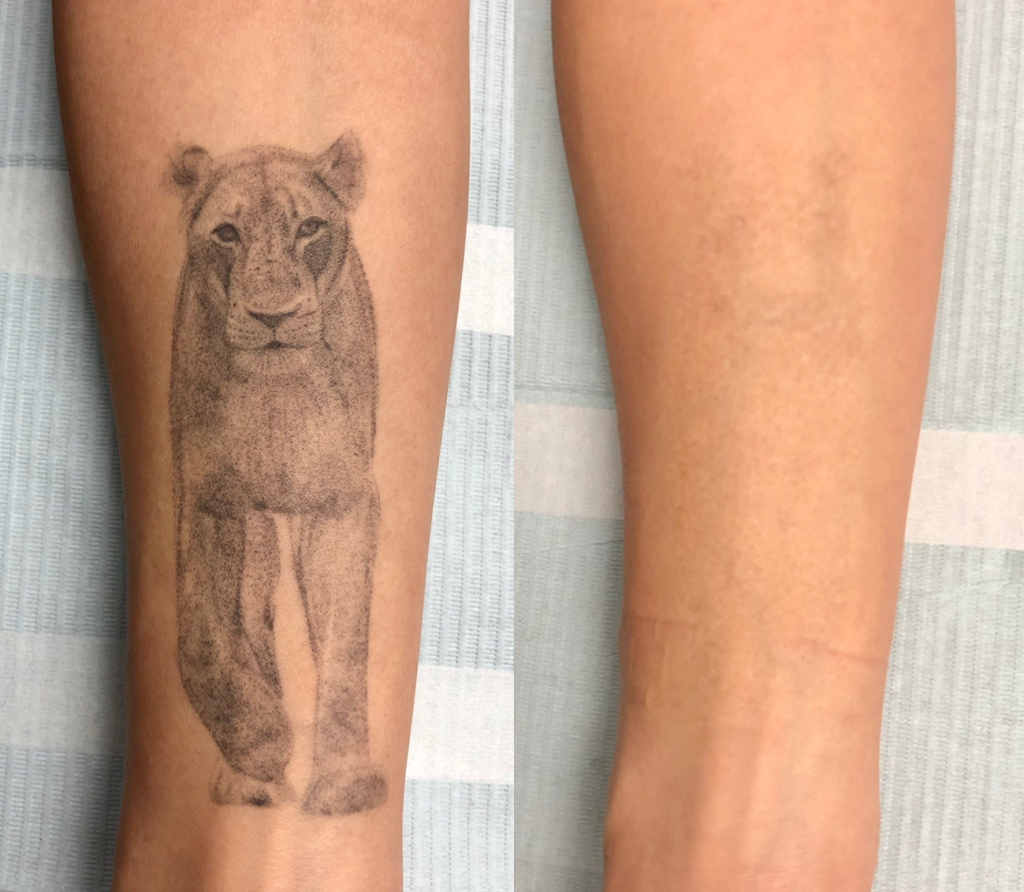
Tattoos are personal, and it is common for feelings about one to change over time. Laser tattoo removal uses short pulses of laser light to break up tattoo ink so the body can clear it gradually, fading the tattoo over a course of sessions without surgery.
At Stanford Clinics in Bahrain, treatment starts with a consultation with a dermatologist, who looks at your tattoo and your skin type, explains how much fading is realistic and plans the treatment with you.
Overview
What is laser tattoo removal?
Laser tattoo removal is a non-surgical treatment that targets the ink in the skin with high-intensity light. The laser breaks the ink into tiny fragments, and the body’s immune system then removes these fragments naturally over the following weeks.
Because the body clears the ink a little at a time, the tattoo fades gradually rather than disappearing after one visit. Most tattoos can be faded significantly, but complete removal is not possible for everyone, and your dermatologist will explain what to expect for your tattoo.
How laser tattoo removal works
The laser delivers very short pulses of light that pass through the top layer of skin and are absorbed by the tattoo ink. This rapid energy breaks the ink particles into smaller pieces, which the lymphatic system can then carry away.
Different ink colours absorb different wavelengths of light, so the settings are chosen to match the colours in your tattoo. Dark colours such as black and dark blue usually respond best. Some colours, such as green, yellow, light blue and white, can be harder to fade and may need more sessions.
Who laser tattoo removal suits
- Unwanted tattoos: tattoos you would like to remove completely or fade as far as possible.
- Lightening before a cover-up: fading an old tattoo so a new design can cover it more easily.
- Amateur and professional tattoos: both can be treated, although they respond differently.
- Older tattoos: these often fade more readily than recent ones.
- Realistic expectations: treatment suits people who understand it takes several sessions and that complete removal is not always possible.
What happens during your appointment
Each session follows a similar pattern:
- Consultation: your dermatologist reviews your medical history, assesses the tattoo and your skin type, and agrees a treatment plan with you.
- Preparation: the area is cleansed, and a numbing cream can be applied to reduce discomfort.
- Laser treatment: the laser is passed over the tattoo in short pulses. Protective eyewear is worn throughout. Most sessions take around 15 to 30 minutes, depending on the size of the tattoo.
- After the session: the area is cooled and covered with a dressing, and you receive your aftercare instructions.
- Next session: sessions are spaced several weeks apart to give the skin time to heal and the body time to clear the ink.
Aftercare
- Keep it clean and dry: follow your dressing instructions and wash the area gently.
- Do not pick: leave any blisters or crusts to heal on their own to lower the risk of scarring.
- Cool the area: a cold compress can ease warmth and swelling in the first day or two.
- Avoid the sun: keep the area covered and use a high-SPF sunscreen once the skin has healed.
- Avoid heat and soaking: skip swimming pools, saunas and hot baths until the skin has healed.
- Get in touch if concerned: contact us if you notice increasing pain, pus or spreading redness.
Side effects and risks
Laser tattoo removal is generally well tolerated when carried out by a trained medical team, but it does have side effects. The common ones are short-lived and expected after most sessions:
- Redness, swelling and warmth in the treated area.
- A white, frosted look on the skin straight after treatment, which fades within minutes to hours.
- Blistering, crusting or pinpoint bleeding in the first few days.
- Tenderness and itching as the skin heals.
These usually settle within a few days to two weeks with good aftercare. Less commonly, the skin can become lighter or darker than the surrounding area for several months, which is more likely in darker skin types or after sun exposure. Rare risks include scarring, changes in skin texture, infection, an allergic reaction to the ink as it breaks down, and some cosmetic or skin-coloured inks turning darker rather than fading.
Laser tattoo removal may not be suitable during pregnancy, on skin with an active infection, rash or open wound, on recently tanned skin, if you have a history of keloid scarring, or if you take certain medicines that make the skin sensitive to light. Please tell your doctor about your medical history and any medications at your consultation.
Sessions, results and cost
- Ink colour: black and dark blue usually respond fastest; some colours need more sessions.
- Amount and depth of ink: dense or professionally layered ink usually needs more treatment.
- Age of the tattoo: older tattoos often fade more easily.
- Size and location: areas with good circulation, closer to the heart, tend to clear faster than hands, feet and ankles.
- Skin type: settings are adjusted for darker skin to reduce the risk of pigment changes, which can mean more sessions.
- Your general health: smoking and some health conditions can slow the clearance of ink.
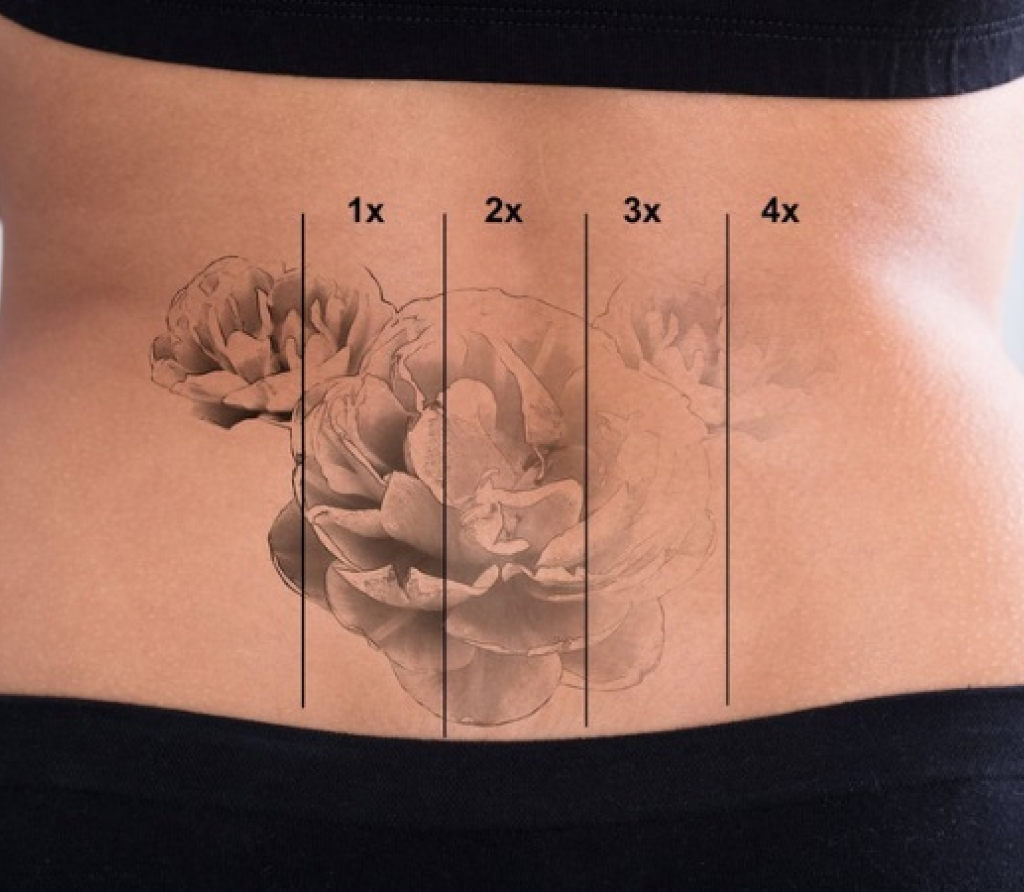
The fading builds up over the course of treatment. Many tattoos need around 6 to 10 sessions, and some need more, spaced roughly 6 to 8 weeks apart, so a full course often takes a year or longer. Results vary from person to person, and some tattoos fade a great deal without disappearing completely.
The cost of laser tattoo removal depends on the size and colours of the tattoo and the number of sessions it is likely to need, so we confirm a price after your consultation rather than quoting a fixed figure. Your dermatologist will explain the plan and the cost before treatment begins.
Book a laser tattoo removal consultation at Stanford Clinics
If you are thinking about removing or lightening a tattoo, the first step is a consultation with one of our dermatologists. We will examine the tattoo and your skin, talk through what is realistic and recommend a plan that suits you.
Book your appointment online, call us or message us on WhatsApp. You can also find our contact details here.
Frequently asked questions
Most people describe it as a sharp snapping or stinging feeling on the skin. A numbing cream and cooling can make it more comfortable, and each session is fairly short.
Usually around 15 to 30 minutes, depending on the size of the tattoo.
It varies. Many tattoos need around 6 to 10 sessions, some need more, and sessions are spaced several weeks apart. Your dermatologist will give you an estimate after examining your tattoo.
Not always. Most tattoos can be faded significantly, but some inks and colours do not clear fully, and a faint shadow can remain. Your dermatologist will explain what is realistic for your tattoo.
Scarring is uncommon when treatment is carried out properly and aftercare is followed, but it can happen. Picking at blisters or crusts and sun exposure increase the risk. Temporary lightening or darkening of the skin is more common than scarring.
Avoid sun exposure, tanning and self-tan on the area for several weeks before treatment, as tanned skin increases the risk of side effects. Tell your doctor about any medicines you take, and follow any instructions you are given at your consultation.