Rhinoplasty in Bahrain

What is rhinoplasty?
Provided by our consultant plastic surgeons at Stanford Clinics. Last updated October 2026.
Rhinoplasty, often called a nose job, is surgery to change the shape, size or proportions of the nose. It can refine the bridge, the tip or the nostrils so the nose sits in better balance with the rest of the face.
At Stanford Clinics in Bahrain, rhinoplasty is planned and performed by our consultant plastic surgeons. Every patient starts with a consultation, where the surgeon examines the nose, listens to what you would like to change and explains honestly what surgery can and cannot achieve for you.
What rhinoplasty can address
Rhinoplasty is tailored to each nose. Depending on your anatomy and goals, it can help with:
- Bridge: smoothing a bump or hump on the bridge of the nose.
- Tip: refining a broad, bulbous or drooping tip.
- Width: narrowing a wide bridge or wide nostrils.
- Straightness: improving a nose that looks crooked or off-centre.
- Proportion: adjusting length, projection or the angle between the nose and upper lip.
- Previous injury: improving shape changes after an old nasal injury.
How rhinoplasty works
During rhinoplasty the surgeon reshapes the bone and cartilage that form the framework of the nose. The skin then settles over the new framework as swelling goes down.
No two operations are the same. Your surgeon will choose the approach and techniques based on your skin thickness, nasal structure and the change you want. The aim is a nose that looks natural and suits your face, not a standard shape.
Open and closed rhinoplasty
In closed rhinoplasty all incisions are made inside the nostrils, so there are no visible external scars. It is often used for more limited changes.
In open rhinoplasty a small additional incision is made across the column of skin between the nostrils (the columella). This gives the surgeon a direct view of the structures, which can help with more detailed tip work or more complex cases. Your surgeon will explain which approach they recommend and why.
Anaesthesia and length of surgery
Rhinoplasty is usually performed under general anaesthesia, so you are asleep throughout. Some smaller adjustments may be done under sedation with local anaesthetic, if your surgeon and anaesthetist consider this suitable.
The operation commonly takes around 1.5 to 3 hours, depending on how much is being changed. Many patients go home the same day; some stay overnight. You will be assessed by an anaesthetist before surgery.
Reshaping the bridge and smoothing a hump
A bump on the bridge of the nose (a dorsal hump) is one of the most common reasons people consider rhinoplasty. The surgeon carefully reduces the excess bone and cartilage, then may narrow or reposition the nasal bones so the bridge looks smooth and even from the front and the side.
The amount removed is planned conservatively, as removing too much can make the nose look over-operated or weaken its support.
Refining the tip of the nose
The tip has a strong influence on how the whole nose looks. Depending on what you need, the surgeon can reshape the tip cartilages to make a broad or bulbous tip more defined, lift a drooping tip, or adjust its projection.
Tip changes take the longest to settle. Swelling in the tip can take many months to go down fully, especially in thicker skin, so the final tip shape develops gradually.
Structure, support and breathing
A good result depends on a nose that is well supported as well as attractive. Your surgeon may use small pieces of your own cartilage (grafts), usually taken from inside the nose, to strengthen or straighten parts of the framework.
If you have any difficulty breathing through your nose, please mention it at your consultation. Your surgeon will assess it and explain whether it can be considered as part of your rhinoplasty plan.
Scarring
With closed rhinoplasty the incisions are hidden inside the nostrils. With open rhinoplasty there is a small scar across the columella, which usually fades well over several months and is often hard to see. If the nostrils are narrowed, small scars may sit in the natural crease where the nostril meets the cheek.
How scars heal varies between people, and some skin types are more prone to darker or raised scars. Your surgeon will talk you through what to expect for your skin.
Who rhinoplasty suits, and who should wait
Rhinoplasty may suit adults who are in good general health, bothered by the shape of their nose, and have clear, realistic expectations. It is important that the decision is your own. Your surgeon may advise waiting or not operating in some situations:
- Still growing: the nose has not finished developing, usually before the late teens.
- Health conditions: uncontrolled medical problems, bleeding disorders or medicines that affect clotting.
- Smoking: smoking or vaping slows healing; you will be asked to stop well before and after surgery.
- Pregnancy: elective surgery is not performed during pregnancy.
- Expectations: hoping for a perfect or identical result to another person's nose, or significant distress about appearance that may need other support first.
- Recent injury or surgery: the nose should be fully healed before further surgery.
Your consultation
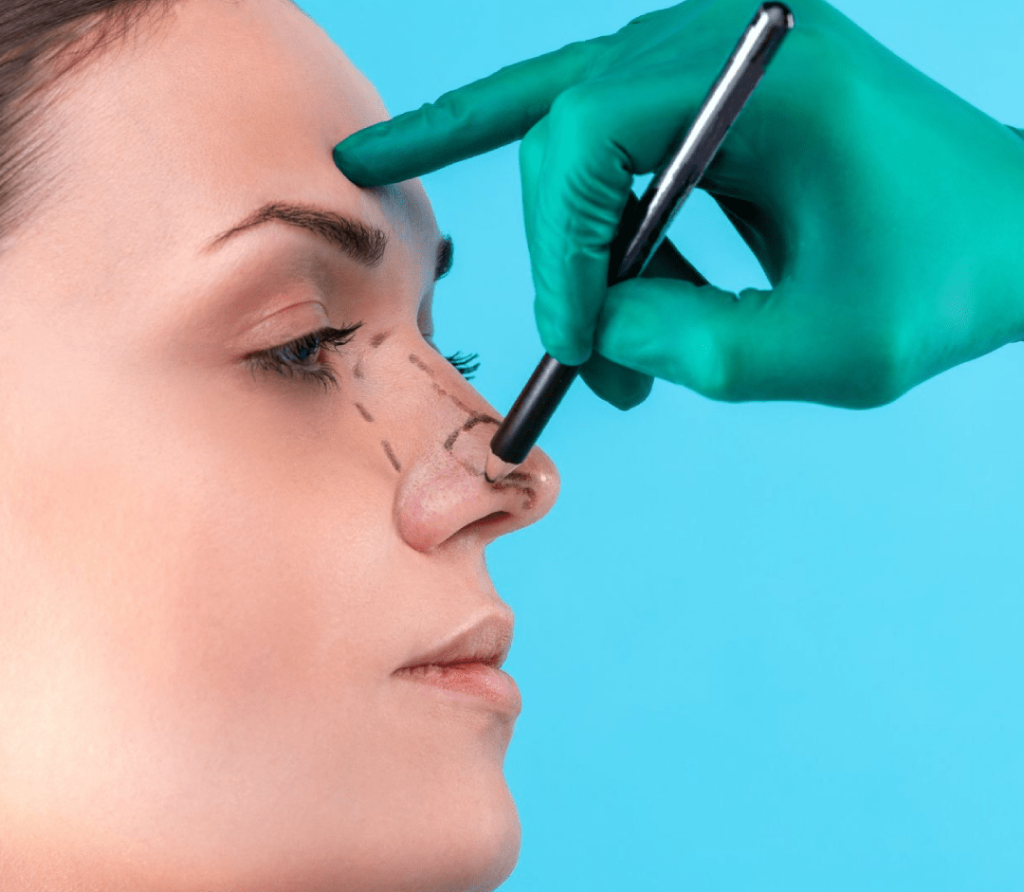
Your consultation is a chance to talk openly about your goals. The surgeon will take your medical history, examine the inside and outside of your nose, assess your skin and facial proportions, and take photographs for planning.
They will explain the recommended approach, the likely recovery, the risks and the limits of what surgery can achieve. You are welcome to take time to think and to come back with questions before deciding.
What happens on the day of surgery
Before surgery: you will be given instructions about fasting, medications to stop (such as some blood thinners and supplements) and stopping smoking. Please arrange for someone to take you home and stay with you for the first night.
Anaesthesia: the anaesthetist checks your health and puts you to sleep, or gives sedation if that has been agreed.
The operation: the surgeon makes the planned incisions, reshapes the bone and cartilage, and closes the incisions with fine stitches.
Splint and dressings: a small splint is usually placed on the outside of the nose, and soft packing or internal splints may be used for a short time.
Recovery room: you are monitored until you are awake and comfortable. Most patients go home the same day or the next morning with pain relief and written aftercare instructions.
Follow-up: the external splint and any stitches are usually removed after about a week, and further reviews are arranged over the following months.

Rhinoplasty cost in Bahrain
The cost of rhinoplasty depends on how complex the surgery is, whether it is a first or revision operation, the approach and techniques used, anaesthesia, and hospital stay. We confirm a price after your consultation, once your surgeon has assessed your nose and agreed a plan with you, rather than quoting a fixed figure.
Frequently asked questions
Is rhinoplasty painful?
You are asleep during the operation. Afterwards most people describe the nose as blocked, tender and sore rather than very painful, and this is usually managed with prescribed pain relief.
When can I go back to work?
Many people return to desk-based work after about 1 to 2 weeks, once the splint is off and visible bruising has faded. Jobs that are physically demanding may need longer.
When will I see the final result?
You will notice a change once the splint is removed, but swelling settles gradually. Most of it has gone after a few months, while the final shape, especially the tip, can take 12 months or longer.
How old do I need to be?
Rhinoplasty is generally not recommended until the nose has finished growing, usually in the late teens. Your surgeon will assess this individually.
Can I wear glasses after surgery?
Glasses can press on the healing bones, so your surgeon may ask you to avoid resting them on your nose for several weeks. Contact lenses can usually be worn once swelling allows.
Could I need another operation?
Most patients need only one operation, but a small proportion choose or need revision surgery to address asymmetry, breathing or shape. Revisions are normally not considered until the nose has fully healed, usually at least a year later.
Recovery, risks and results
Aftercare
- Keep your head raised: sleep on extra pillows for the first week or two to reduce swelling.
- Leave the splint alone: keep it dry and in place until your follow-up visit.
- Do not blow your nose: for at least the first two weeks, or as advised. Sneeze with your mouth open.
- Take medicines as prescribed: and avoid painkillers that thin the blood unless your surgeon agrees.
- Avoid exertion: no heavy lifting, bending or strenuous exercise for several weeks.
- Protect your nose: avoid knocks, contact sports and resting glasses on the nose until cleared.
- Sun protection: protect healing skin and scars from the sun.
Recovery timeline
Recovery is gradual and varies between people. As a general guide:
First week: the nose feels blocked and swollen, with bruising around the eyes. Rest with your head raised. The splint is usually removed at around 7 days.
Weeks 2 to 3: most visible bruising has faded and many people feel comfortable returning to work and social activities.
Weeks 4 to 6: you can usually return to gentle exercise, then gradually to more strenuous activity. Contact sports are typically avoided for longer.
Months 3 to 12 and beyond: residual swelling, particularly in the tip, continues to settle slowly.
Side effects and risks
Common and expected: swelling, bruising around the eyes, a blocked nose, mild nosebleeds or oozing in the first days, temporary numbness of the tip or upper teeth, and a temporarily reduced sense of smell.
Less common risks: bleeding that needs treatment, infection, poor wound healing, noticeable scarring, asymmetry or irregularities, persistent breathing difficulty, a hole in the septum (septal perforation), and a result that does not meet your expectations, which may lead to revision surgery.
Anaesthetic risks: general anaesthesia carries its own small risks, such as reactions to medicines, nausea and, rarely, blood clots or breathing problems. These are discussed with you by the anaesthetist.
Your surgeon will explain how these risks apply to you. Please contact us promptly if you notice heavy bleeding, increasing pain, fever or redness.
How long results last
Because rhinoplasty changes the underlying bone and cartilage, the result is long-lasting. The nose will still change gradually with natural ageing, and injury to the nose can alter the result. Results vary from person to person and depend on your anatomy, skin and healing.
Book a rhinoplasty consultation at Stanford Clinics
If you are thinking about rhinoplasty, the first step is a consultation with one of our consultant plastic surgeons. We will listen to your goals, examine your nose, and explain the options, recovery and risks clearly so you can make an informed decision in your own time.
Book your appointment online, call us or message us on WhatsApp. You can also find our contact details here.